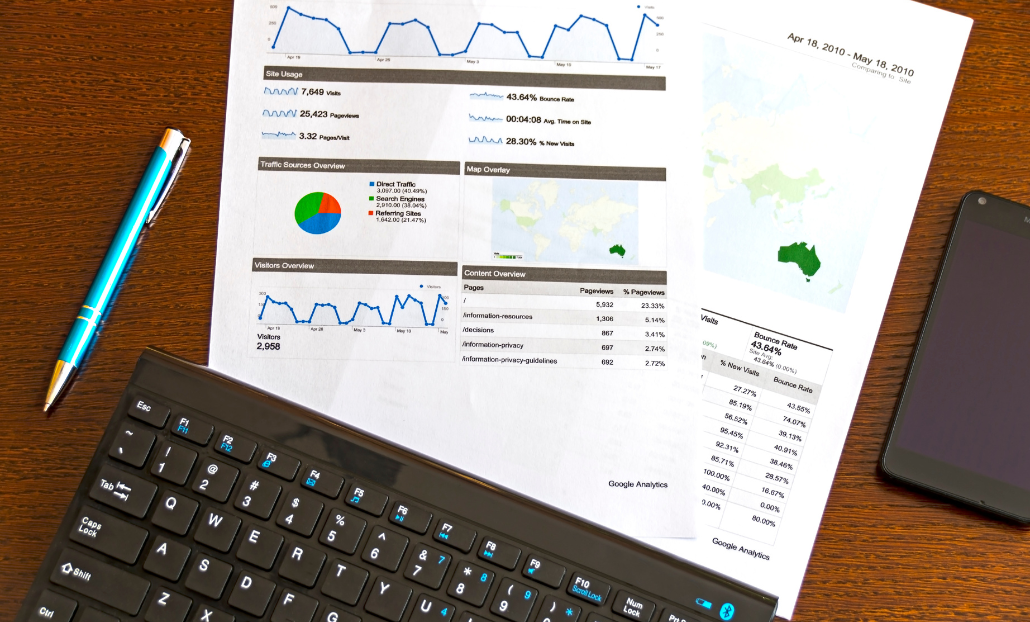
Open up your analytics. What do you see?
Sessions. Users. Bounce rate. Pages per session. Average engagement time. Traffic by channel. Top landing pages. Exit pages. Conversion rate. Goal completions.
And that's before you've opened a single ad platform.
Most businesses aren't short of data. They're drowning in it. And yet ask a simple question - "which channel drove the most revenue last month?". And suddenly nobody's quite sure.
That's not an analytics problem. It's a setup problem.
Most tracking isn't built to answer the questions that drive real decisions. It's built to track everything and hope something useful falls out.
This post covers what good tracking actually looks like in 2026. Simple, reliable and good enough to steer budgets with confidence.
The most common tracking problem isn't that businesses have no data. It's that the data they have is incomplete, misconfigured, or measuring the wrong things — and nobody knows it.
When Google forced the move from Universal Analytics in 2023, most businesses migrated because they had to. But migrating isn't the same as setting up properly.
A lot of GA4 accounts are technically live but missing half the picture. Key events not tracked. Conversions not configured. eCommerce data not flowing through correctly.
The numbers look plausible. That's the dangerous part.
Most businesses are still running on last-click attribution. That means Google gives 100% of the credit for a sale to the last channel the customer touched before converting.
Here's what that looks like in practice.
Someone finds you through organic search. They come back via a social post two weeks later. They click a Google Ad on the day they buy. Last-click gives all the credit to the paid ad. SEO gets nothing. Social gets nothing.
The paid channel looks like a hero. Gets more budget. The channels that actually started the conversation get quietly defunded.
It's one of the most common reasons businesses underfund SEO and overfund paid search. Not because paid search isn't working — because the attribution model is telling an incomplete story.
Underneath all of this is a simpler issue nobody talks about. Tracking set up years ago, by someone who has since left, and never maintained.
Tags firing twice. Goals tracking the thank you page instead of the actual purchase. Filters that were supposed to exclude internal traffic but don't.
Small things. But they compound. And they turn your reporting into something you can't fully trust.
Before getting into what to set up, it's worth being clear on what you're trying to achieve.
The goal isn't to track everything. It's to track the things that help you make better decisions. A solid setup should be able to answer these five questions, reliably, every single month:
Traffic is easy to generate. Revenue is the point. Your tracking should connect the two clearly.
If you're spending across paid search, paid social and SEO, you should know what each one costs you to win a customer. Without that number, budget decisions are guesswork.
A product page that isn't converting. A checkout step with high abandonment. A landing page getting clicks but no enquiries. You need to see where the journey breaks down.
Revenue up 20%? Traffic down 15%? You should be able to point to a reason. Data without context is just noise.
Not which ones are getting the most clicks. Which ones are driving the outcomes that matter.
If your current setup can't answer these, it doesn't matter how many dashboards you have.
Here's what a solid, reliable tracking setup looks like in 2026. Not a technical deep dive, that's what the checklist is for. Just the key components, and why each one matters.
Out of the box, GA4 tracks very little that's genuinely useful. The configuration is where the value comes from.
That means purchase events firing correctly for eCommerce. Form submission events for lead generation. Phone call tracking where relevant. Key engagement points that show someone moving through the funnel.
Most accounts don't have this. Which means most accounts are reporting on the wrong things.
If you're not using GTM to manage your tracking, you should be.
It lets you add, edit, and manage tracking tags without touching the website code every time. Faster implementation. Fewer developer dependencies. Much lower risk of things breaking when changes are made.
Doing tracking without GTM is like doing your accounts in a notebook. It works — until it doesn't.
This one catches a lot of businesses out.
GA4 and your ad platforms (Google Ads, Meta etc) need their own conversion tracking. Importing GA4 goals into Google Ads is better than nothing, but it's not the same as native conversion tracking. The difference shows up in how your campaigns optimise.
Enhanced conversions in Google Ads, and the Meta pixel with proper event setup, give the platforms the signal quality they need to find the right customers. Without it, you're asking the algorithm to optimise for something it can't see clearly.
UTM parameters are the tags you add to URLs in your campaigns so GA4 knows where traffic is actually coming from.
Without them, a significant chunk of your traffic ends up in the "direct" bucket, which tells you nothing useful. With them, you can see exactly which email, which social post, which campaign drove which result.
Simple. Consistently skipped. One of the most impactful things you can fix.
One place. One set of numbers. Everyone looking at the same data.
Whether that's GA4, a simple Looker Studio dashboard, or a reporting tool — it doesn't matter much. What matters is that the marketing team and the business owner aren't pulling different numbers from different places and arguing about which ones are right.
Before:
A growing eCommerce brand. GA4 set up but never properly configured. No purchase events firing. Conversion tracking in Google Ads pulling from imported GA4 goals that aren't working correctly. No UTMs on email campaigns, so half the revenue is showing as direct traffic. Last-click attribution making paid search look like it's doing all the work.
The marketing team is spending 60% of the budget on paid search because "that's what the data says is working." SEO and email are being underfunded. Nobody can explain why revenue dipped in October.
After:
GA4 properly configured with purchase events, form submissions, and key engagement tracking. Google Ads and Meta running native conversion tracking with enhanced conversions enabled. UTMs applied consistently across every campaign. A simple Looker Studio dashboard showing revenue by channel, CPA, and conversion rate on the top five landing pages.
Within two months, the picture changes completely. Email is driving 28% of revenue and costing almost nothing to acquire. Paid search ROAS is lower than reported. SEO is contributing to first-touch conversions that last-click was ignoring entirely.
The budget gets rebalanced. The decisions get easier. Nothing about the business changed, just the ability to see it clearly.
Most business owners already suspect that half the metrics they're looking at aren't telling them anything useful. They're right.
Track these:
Deprioritise these:
The goal isn't to track everything. It's to track the right things, look at them regularly, and actually do something with what you find.
Having the right setup is only half the job. The other half is building a rhythm around it so the data actually gets used.
A weekly check doesn't need to take long.
Ten minutes. Revenue by channel. CPA. Conversion rate on key pages. Enough to spot something worth investigating before it becomes a problem.
A monthly review is where you go deeper.
Compare against the previous period. Look at what moved and why. Make the budget calls.
Keep a log of what changed and when.
Campaign launches. Website updates. Price changes. Seasonal shifts. Anything that might explain a movement in the data.
When revenue drops 15% in a week and you have no record of what changed, you're guessing. When you have a log, you're diagnosing. It's a small habit that saves a lot of time.
Keep your dashboard simple.
Five or six numbers. Revenue from organic. Revenue from paid. CPA by channel. Conversion rate on your top three landing pages.
If those numbers are moving in the right direction, something's working. If they're not, you know exactly where to look.
Data is only useful if it changes what you do. If your reporting isn't influencing decisions, it's not tracking. It's admin.
You don't need more metrics. You need the right ones, set up properly, looked at regularly, and connected to the decisions that actually move your business forward.
The businesses that make the best marketing decisions aren't always the ones with the most sophisticated setups. They're the ones that track the right things, trust the numbers, and act on them consistently.